POS Table Order QR Code
Odoo is an extensive open-source ERP software made up of an integrated suite of business modules, including CRM, Sales, Accounting, Inventory Management and most important of them all, the POS (Point of Sales).
A critical point of purchase where the customers do payments for the products purchased is referred to as POINT OF SALE. Odoo's online Point of Sale application is based on a simple, user-friendly interface. The Point of Sale application can be used online or offline on iPads, Android tablets, or laptops.
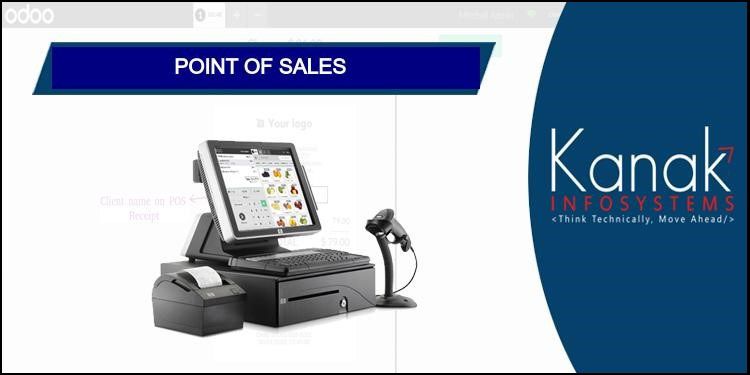
Odoo Point of Sale is fully integrated with the Inventory and the Accounting applications. Any transaction with your point of sale will automatically be registered in your inventory management and accounting and, even in your CRM as the customer can be identified from the app.
This POS is widely used at restaurants and bars also. And with the option to set up individual tables and manage orders for them, it makes it very easy to manage orders from different tables easily.
If you are a restaurant/bar owner, one thing that always comes to your mind is how to make your place stand out. We can always work on food quality and that should always be the priority but what comes with that is the user experience. A customer remembers a place with the experience he/she had there. This includes the food, hygiene, and hassle-free ordering experience.
So what can we do to make this experience worth remembering?
The answer is to provide them with something that makes them excited as well as happy. One such feature that you can provide to your customer is to order directly from their phones & tablets without waiting for anyone. The process of ordering is very important because a customer judges your place based on these small experiences.
Now, the question comes how to make this process faster and easier to manage in Odoo.
Subscribe our Newsletter for Odoo tips, technical insights, and more!
In this blog, we are going to discuss an amazing module which allows the user to directly place an order from its table by scanning a QR code.
POS Scan Table QR Code (Restaurant)
This module allows the customer to make an order from there phone sitting at the table and that order are directly sent to the kitchen. All user needs to do is scan the QR code at the table and it'll directly place an order of the selected item from that table to the kitchen.
Variations in the order help in making the customer happy. If the customer has the option to modify the order by adding some modifiers to their order, then it makes the customer more satisfied and in turn, profits to the restaurant.
For this purpose, we have another module, POS Product Modifiers, which is interrelated to the POS Table QR Code Module. It is a very useful addon for making the order process effortless for the customer.
This module helps in generating modifiers for your table order products so the customer can add these modifiers to the order if they want.
For example, if we have a Food Product Pizza on our menu. We can add the Cheese Burst as a modifier, so the customers have the leverage to add the Cheese burst to their orders if they want.
Don't miss out on the chance to elevate your restaurant's dining experience. Request a demo of our POS Table Order QR Code module to see how it can streamline your operations and delight your customers.
So, let us see how we can configure these modules, to setup the restaurant and tables.
Setting Up Floors and Tables:
So, first of all, we'll setup the floor plans and tables for the restaurant. In simple words, we'll setup the floors and their respective tables.
First of all, activate the developer mode. Navigate to the settings and scroll down below. Here we can see a menu, "Activate the developer mode", click on it and the developer mode will be activated.
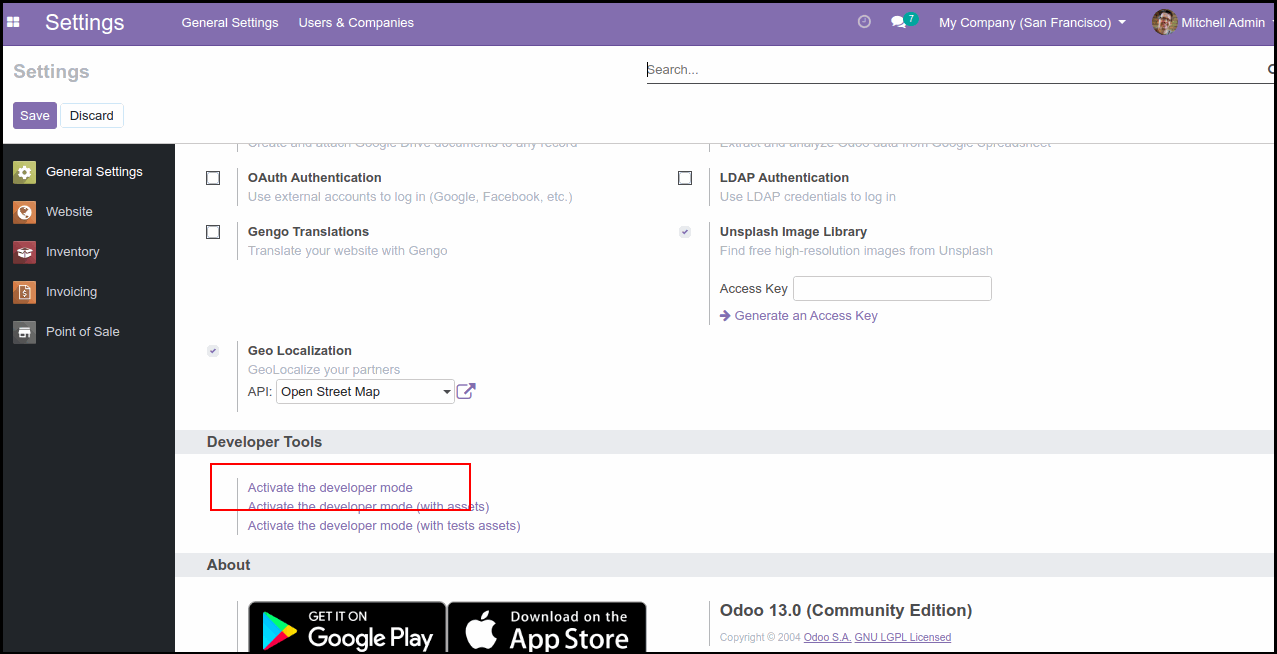
This is needed so that we have full access to the configuration menu for setup.
Now, Navigate to POS > Configuration:
Here, we can see a menu named Floor Plans.
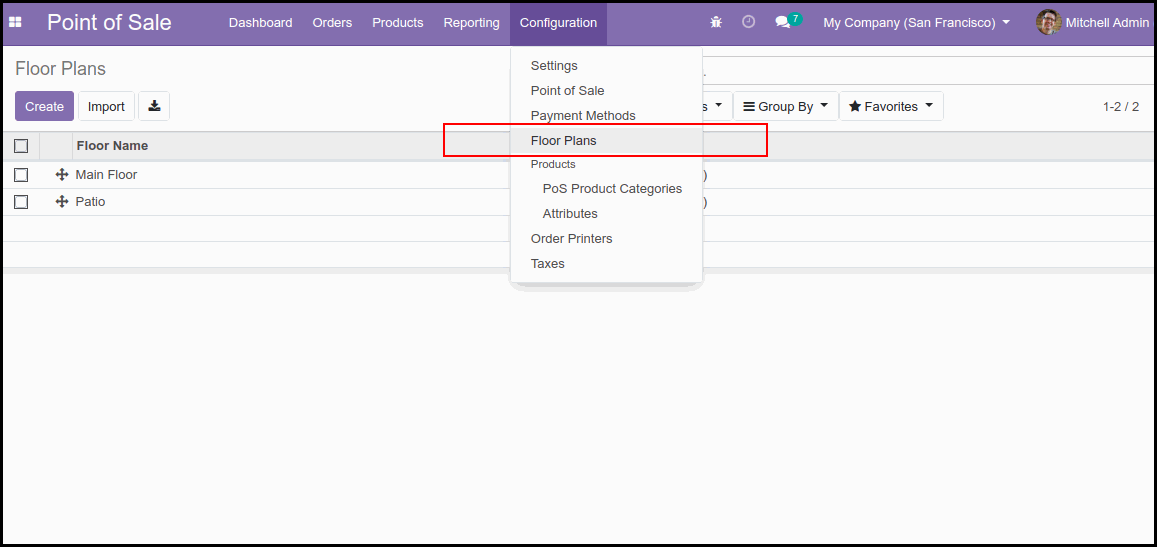
Now we can create the Floors and tables for the floors. Click on create and fill up the details. Here, we'll name the floor and select the POS to which this floor will belong.
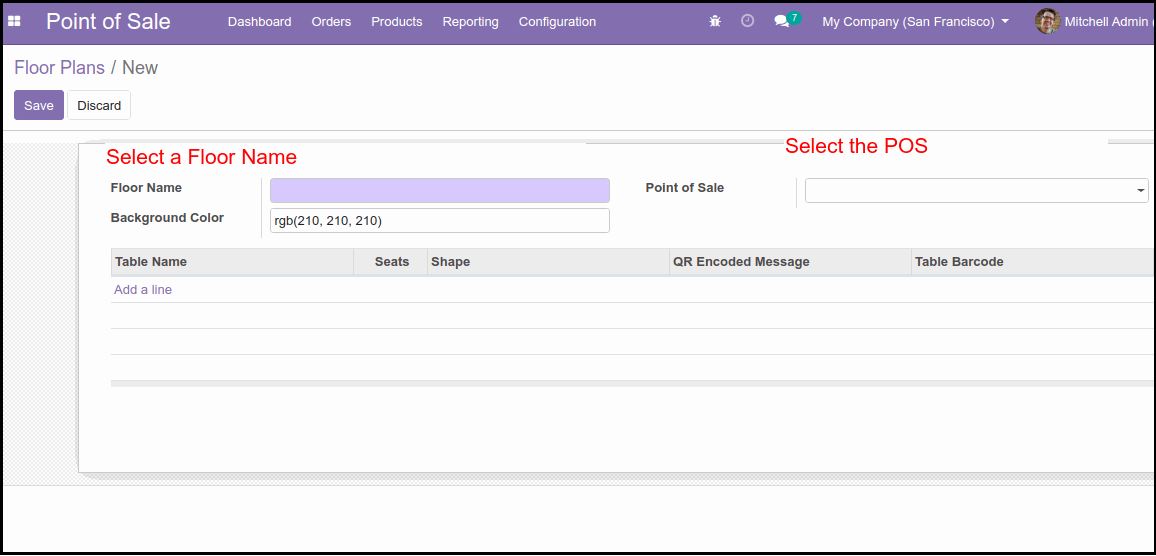
After that, we will create tables for that floor. Click on Add A-line and a form will popup.
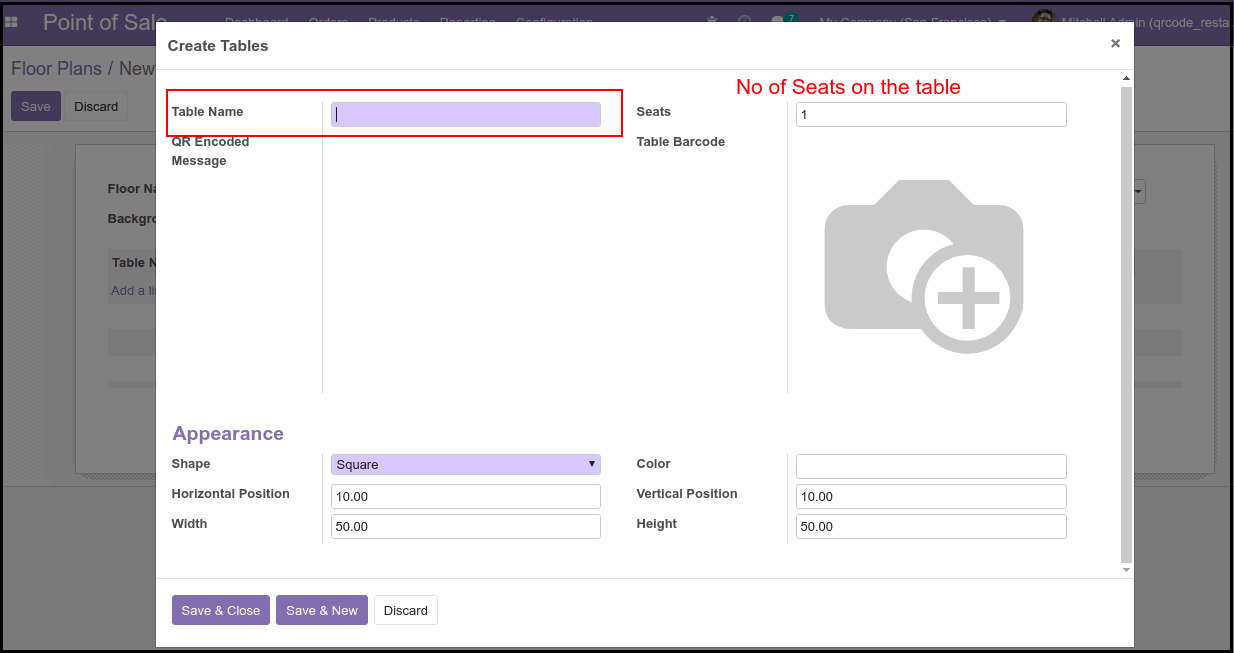
After the floors and tables are setup. Our next step is to create products for the order menu.
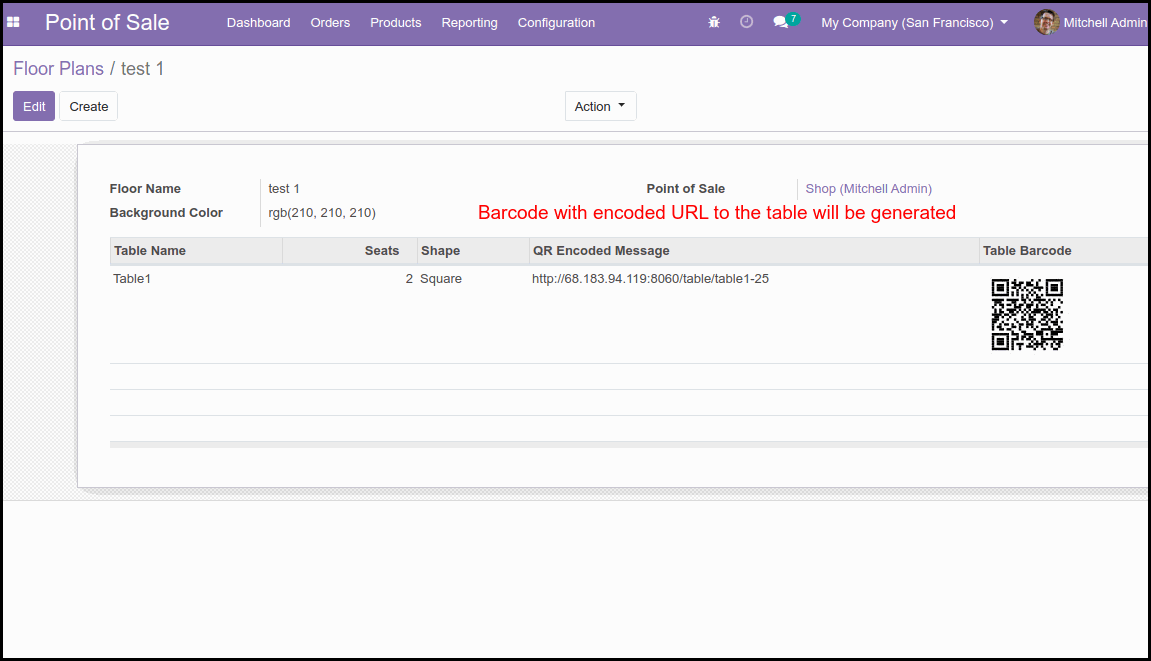
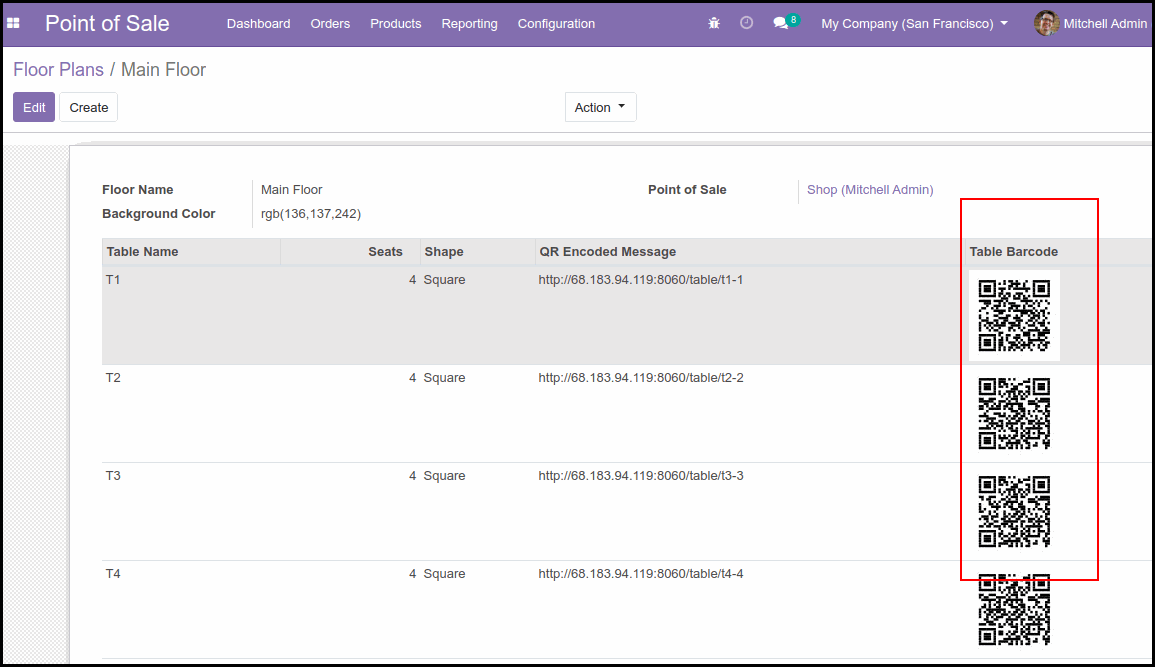
Table Order Products:
It is not necessary to display all the products present in your system to the orders menu. Here, we'll see how we can setup products for Orders.
Navigate to POS > Products:
Create a new product. For example, in this case, let us create a new product Pizza for the table order.
Enter the name, and make sure that you enable 'Is Table Order?' checkbox because this checkbox differentiates other products from the table menu products. Also, select the price for the product and the taxes.
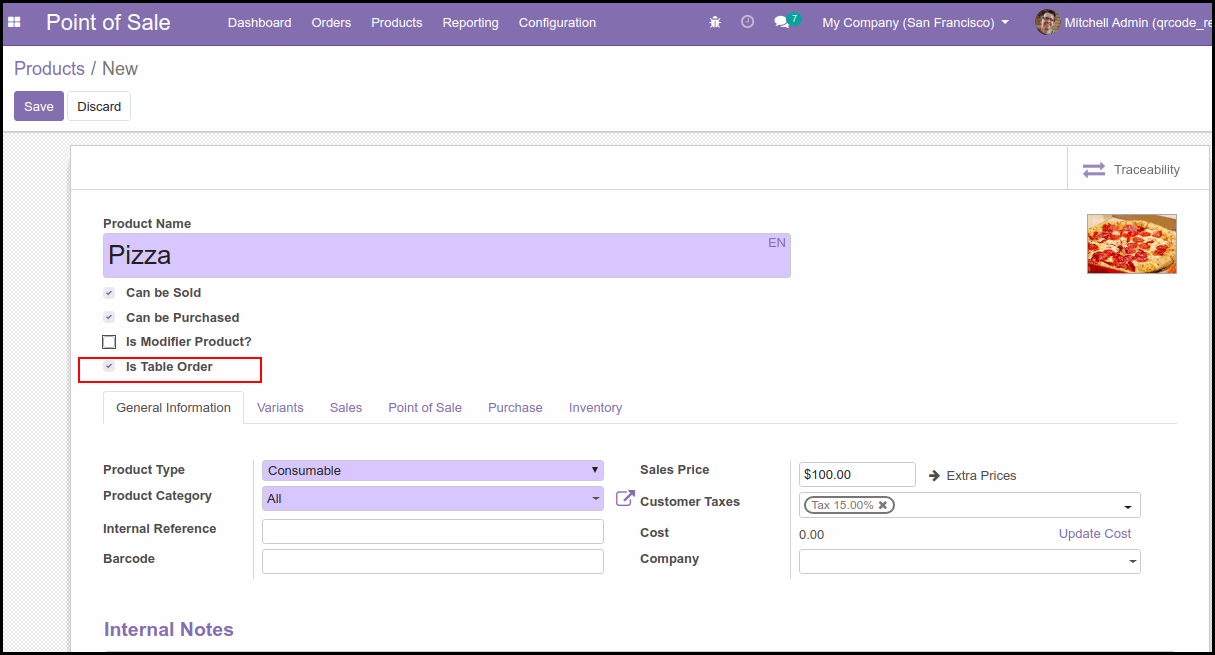
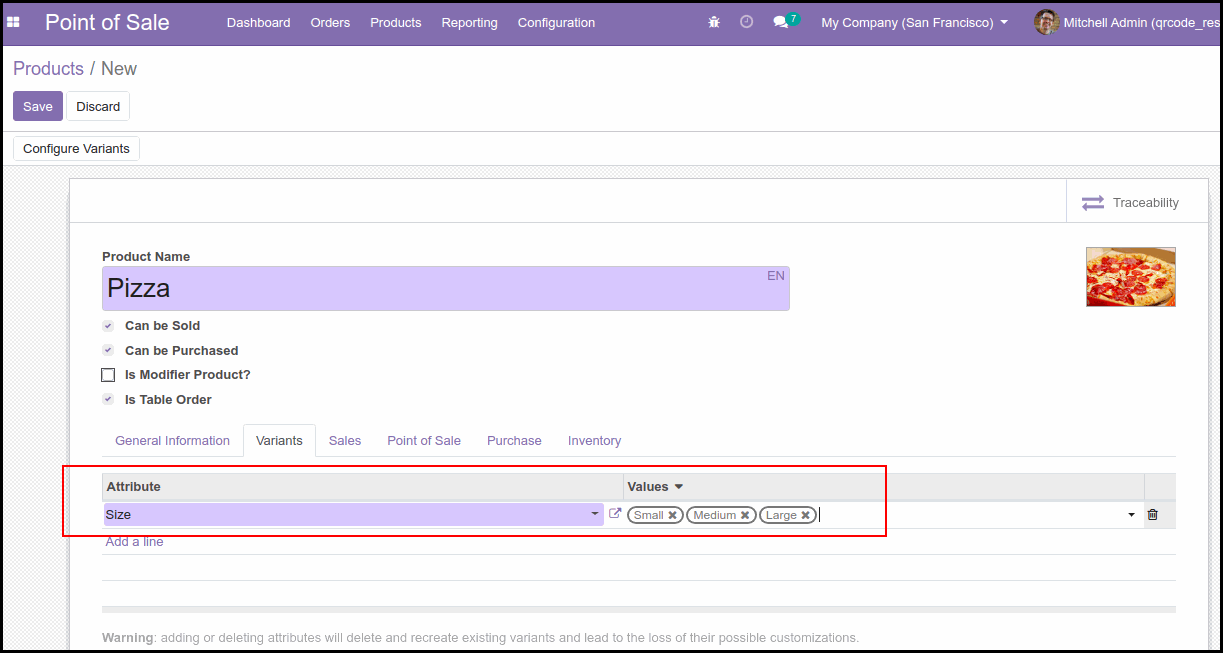
After that, navigate to the Point of Sale and select the category for the product.
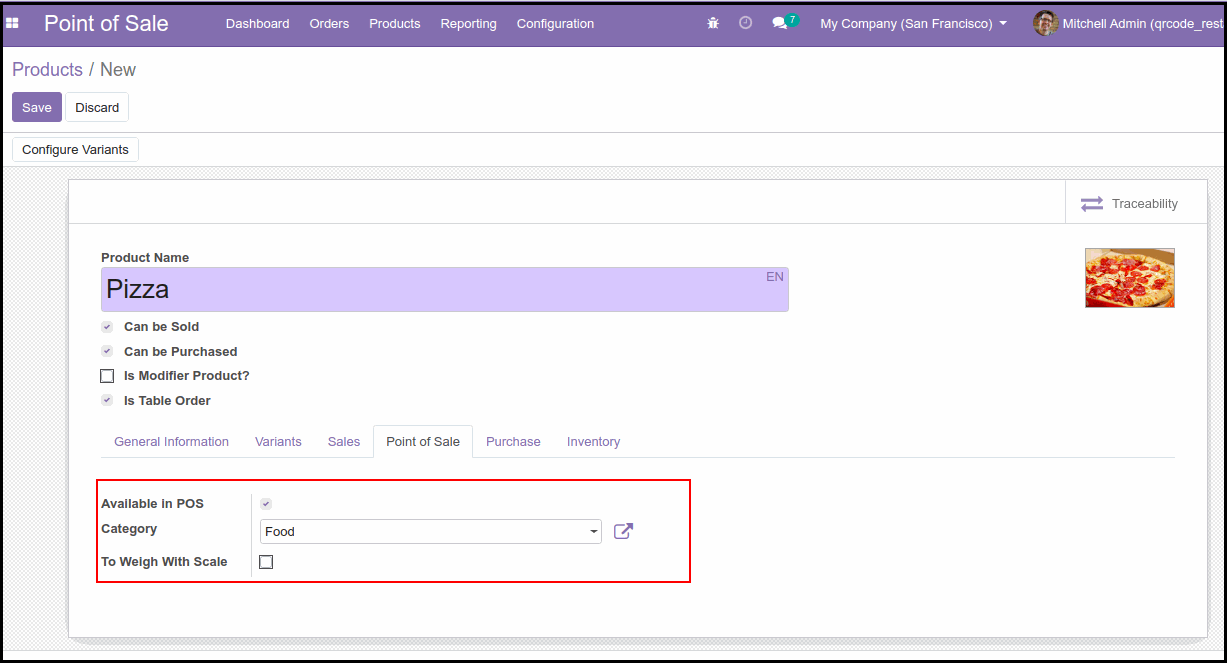
Now click on Save. We can also configure various prices for the size variants.
So our table product is generated, next we'll see how we can generate modifiers for the products.
Product Modifiers:
To generate modifies for this product, we need to enable "Is Modifier Product?" checkbox. After that, Navigate to POS > Products > Modifiers.
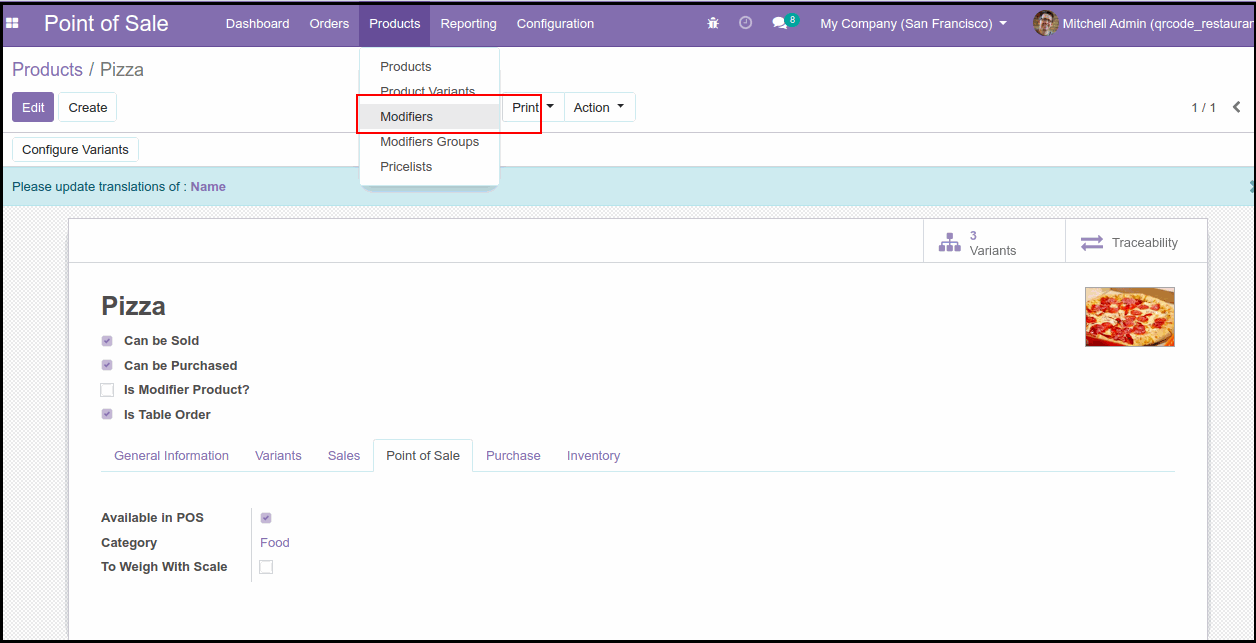
Here we can generate modifiers that can be added to the product.
For example, let us create a modifier Cheese for the pizza. This means that we can add Cheese/Cheese burst to the pizza as an addon/modifier.
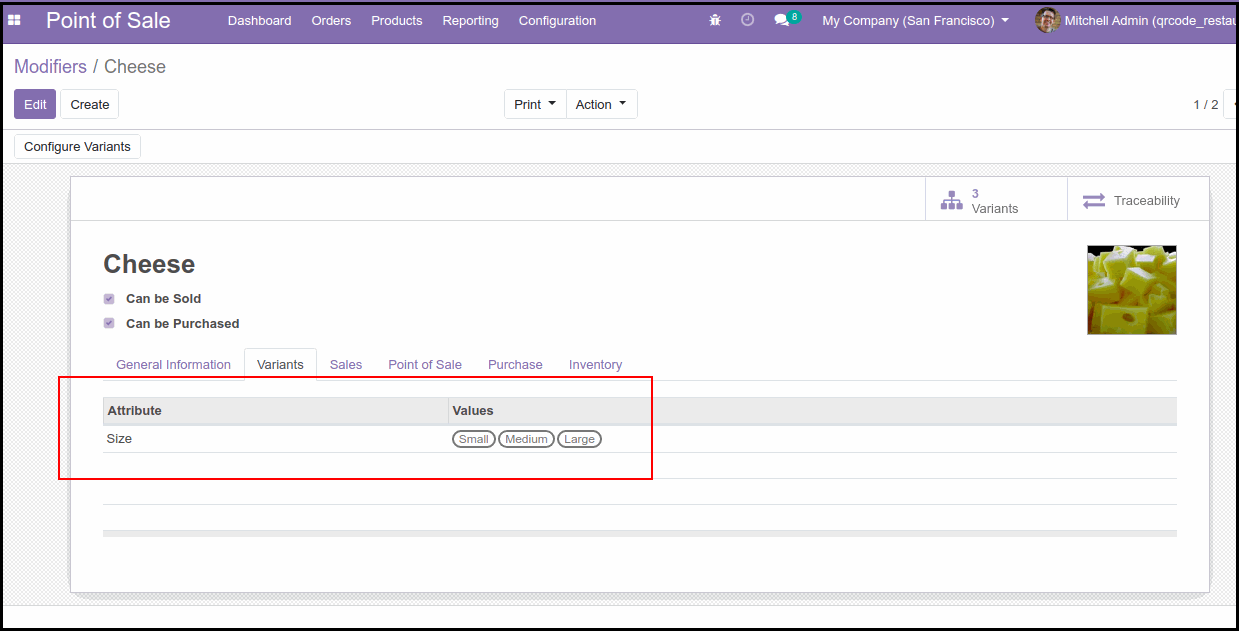
We can also configure variants for a different amount of Cheese that can be added.
I have also created another modifier Green Pepper which can be added as a Topping.
Next we'll Navigate to POS > Products > Modifier Groups:
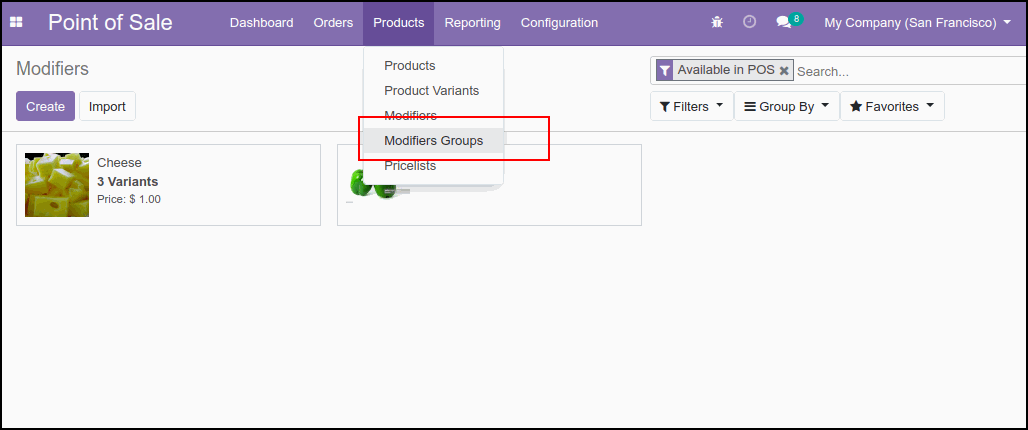
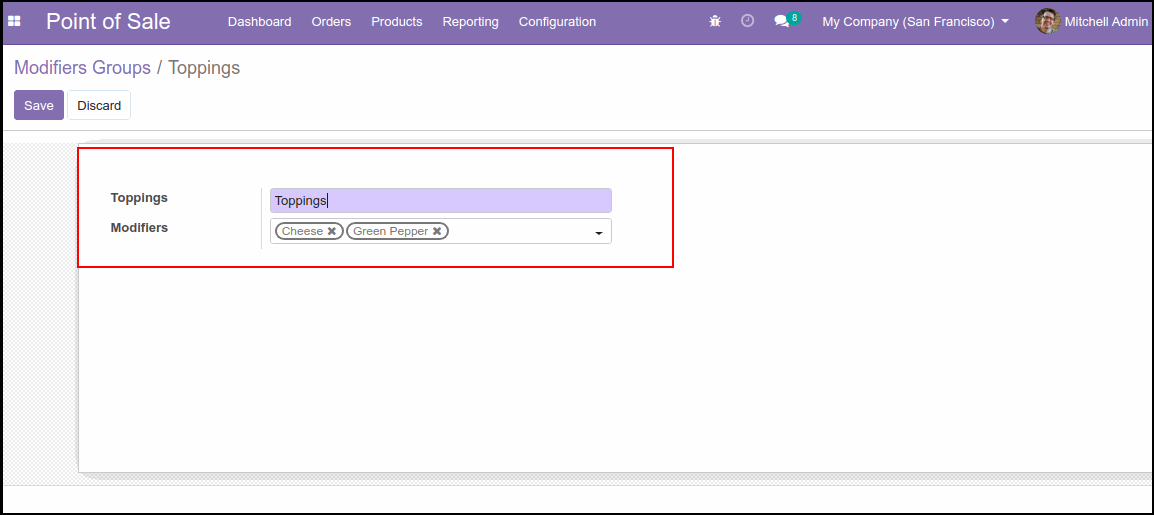
Here we'll add the modifiers that we have created to a group, say Toppings.
Click on create and give a name to the group. Next, add the modifiers that belong to this group. This will help us in adding the modifiers to a product by simply selecting the group.
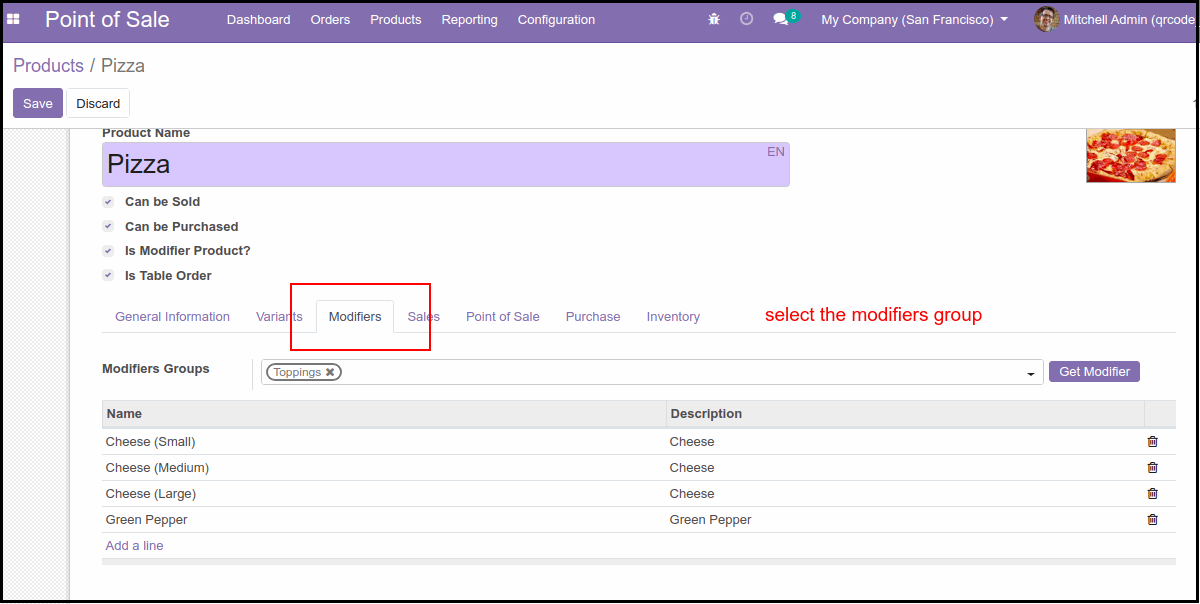
After the modifiers are configured, next we'll move back to the product "Pizza" and add modifiers to this product. Enable "Is Modifier Product?". We'll see a new tab "Modifiers". Here, we'll select the group of the modifiers which we want to add to this product and click on "Get Modifier". After this, we can see that the modifiers are generated for this product. We can add also add a modifier separately to the line if we want.
Now our Table Product is ready, and we can see that the product is now displayed at the table for an order. We can access the table by the QR code or the URL.
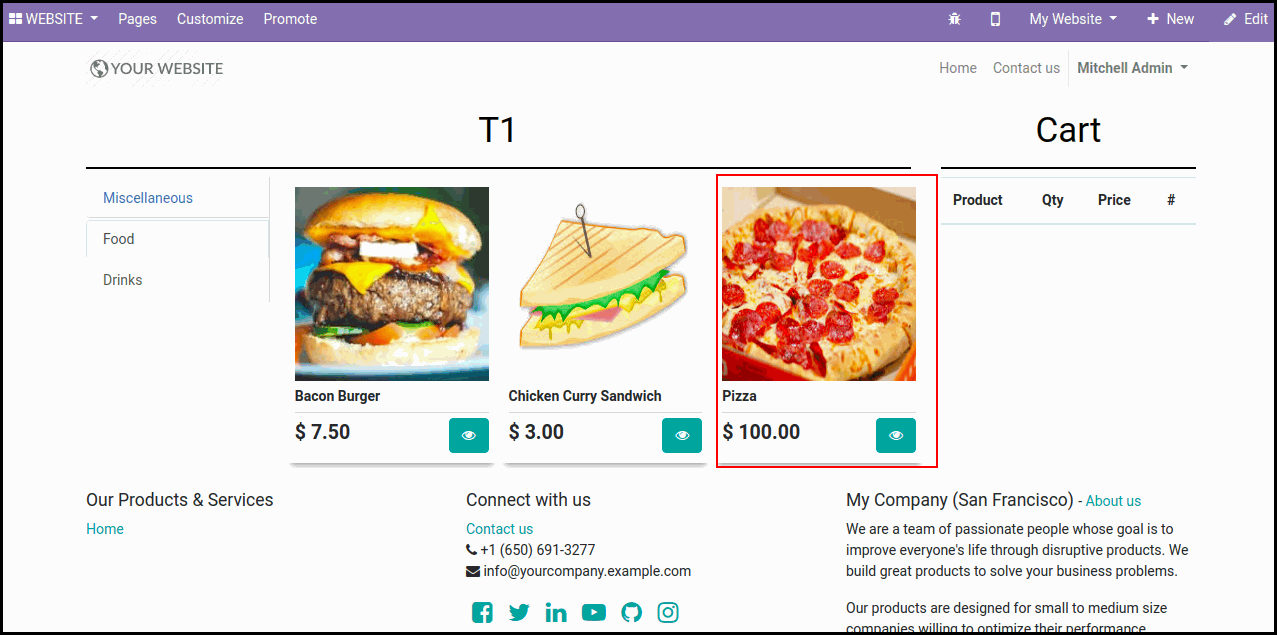
Let us start the session to see the order process now.
The QR code can be printed and assigned to the respective tables for which they are generated. The customers will scan the QR code using the mobile or Tab and the Website URL for that table will open up.
After scanning the QR Code, the table URL will open up in the browser.
The customer can sort by the categories of the products.
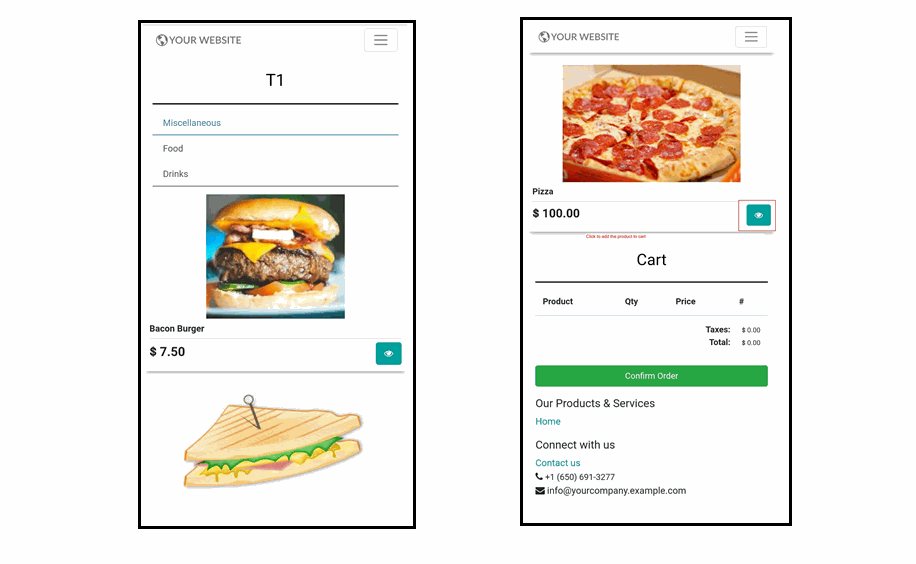
Let us Add Pizza to the Order:
After clicking on the product, a prompt will open up regarding the variant of the product to be added, in this case, the size of the Pizza.
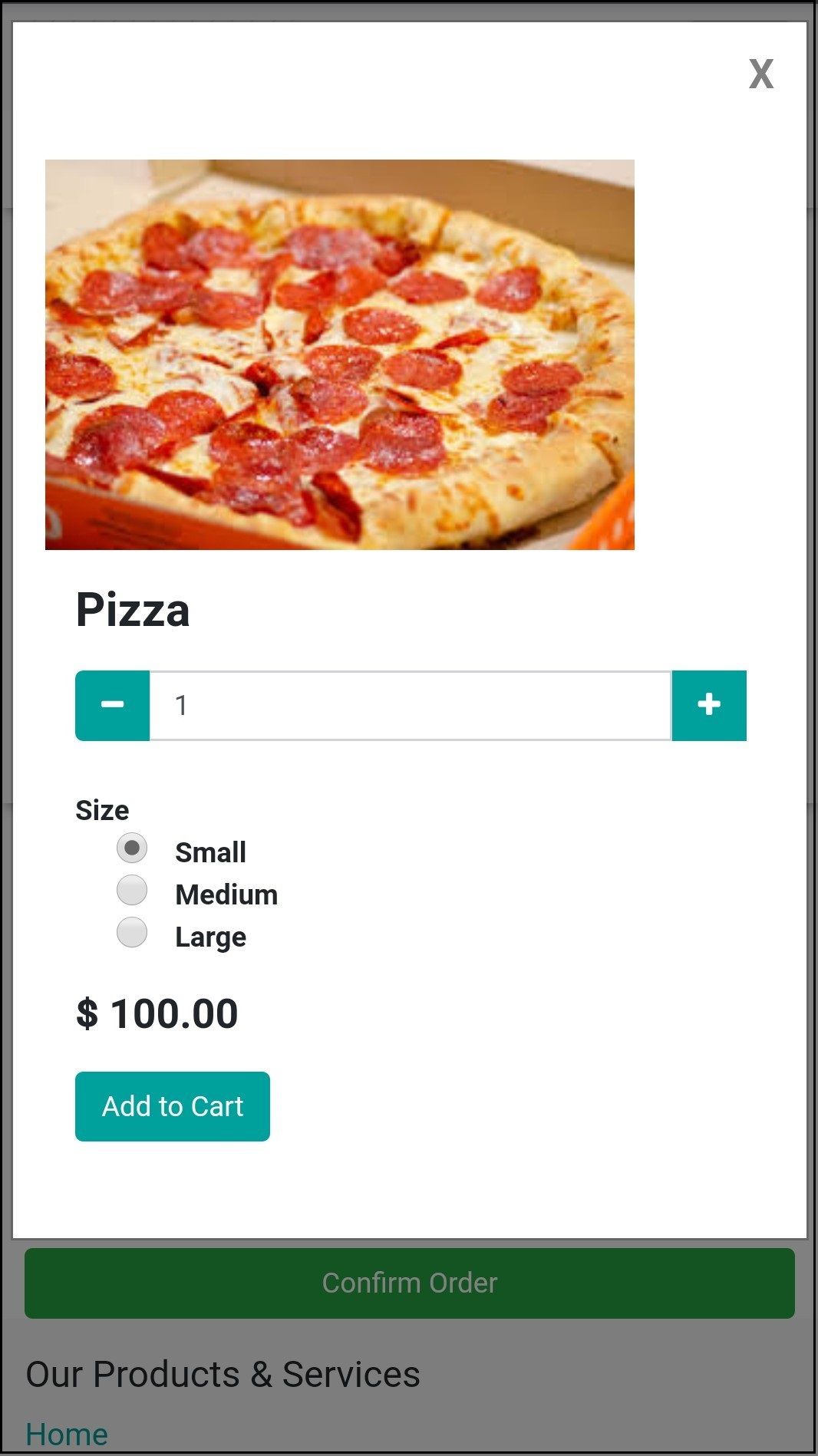
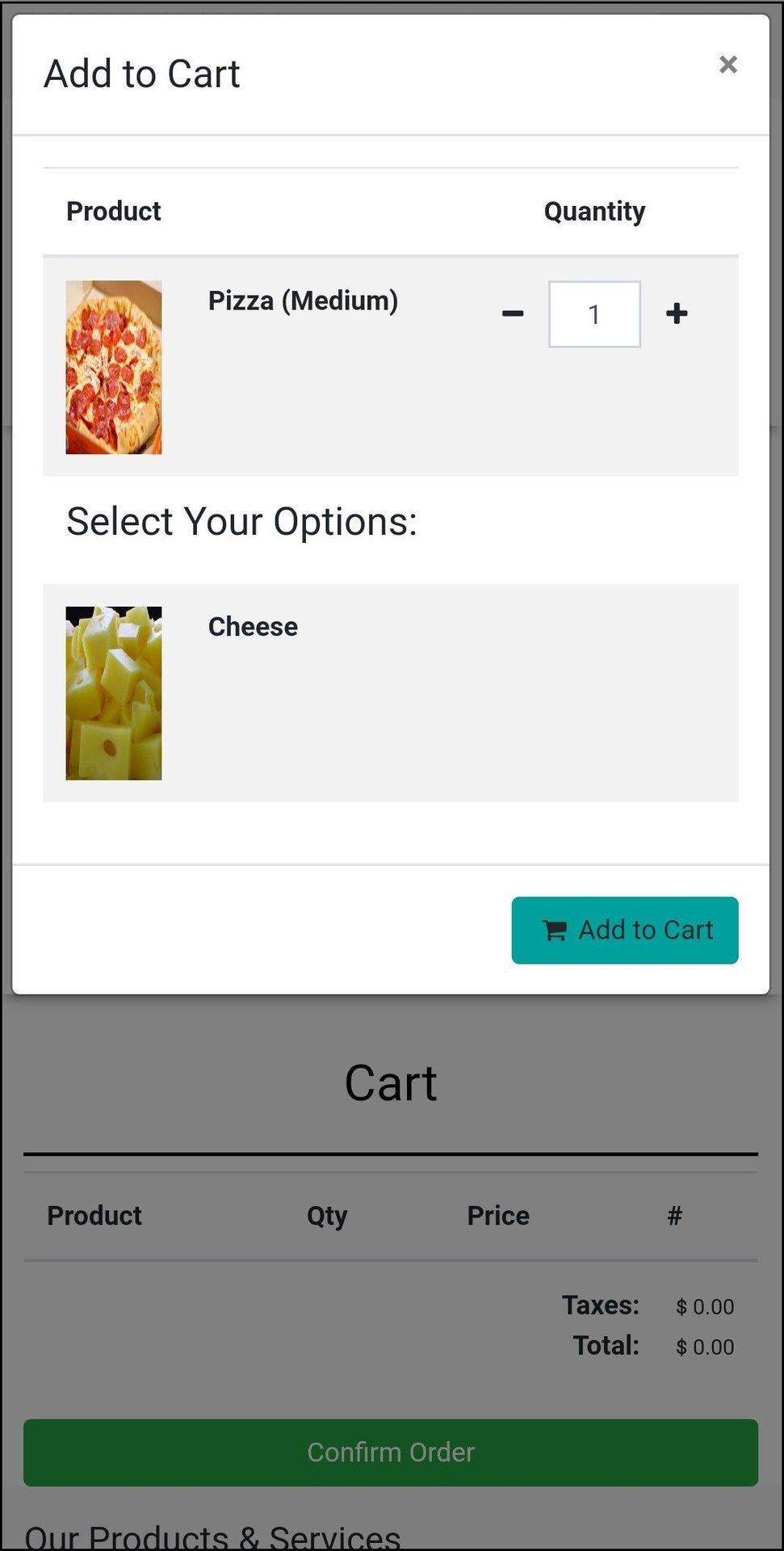
After clicking on "Add to Cart", another menu will pop up showing the modifiers available on this product. In this case, Cheese, the customer has the option to add or remove cheese to the cart. Click on "Add to cart".
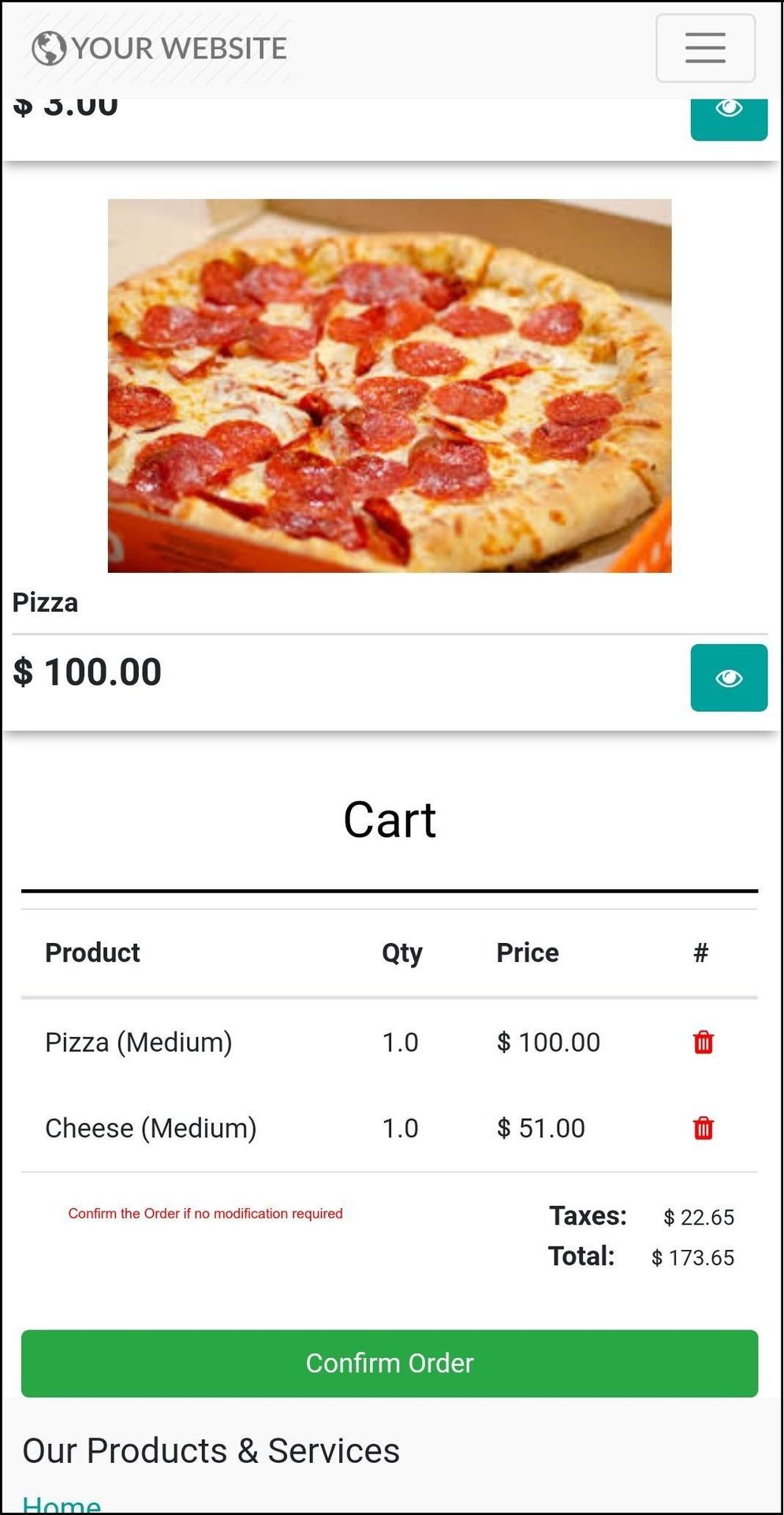
The product and modifier will be added to the cart. The customer can modify the order if they want to. And then click on Confirm Order.
After clicking on Confirm Order, the Order will be sent to the kitchen and a token number will be generated for the table and token number.
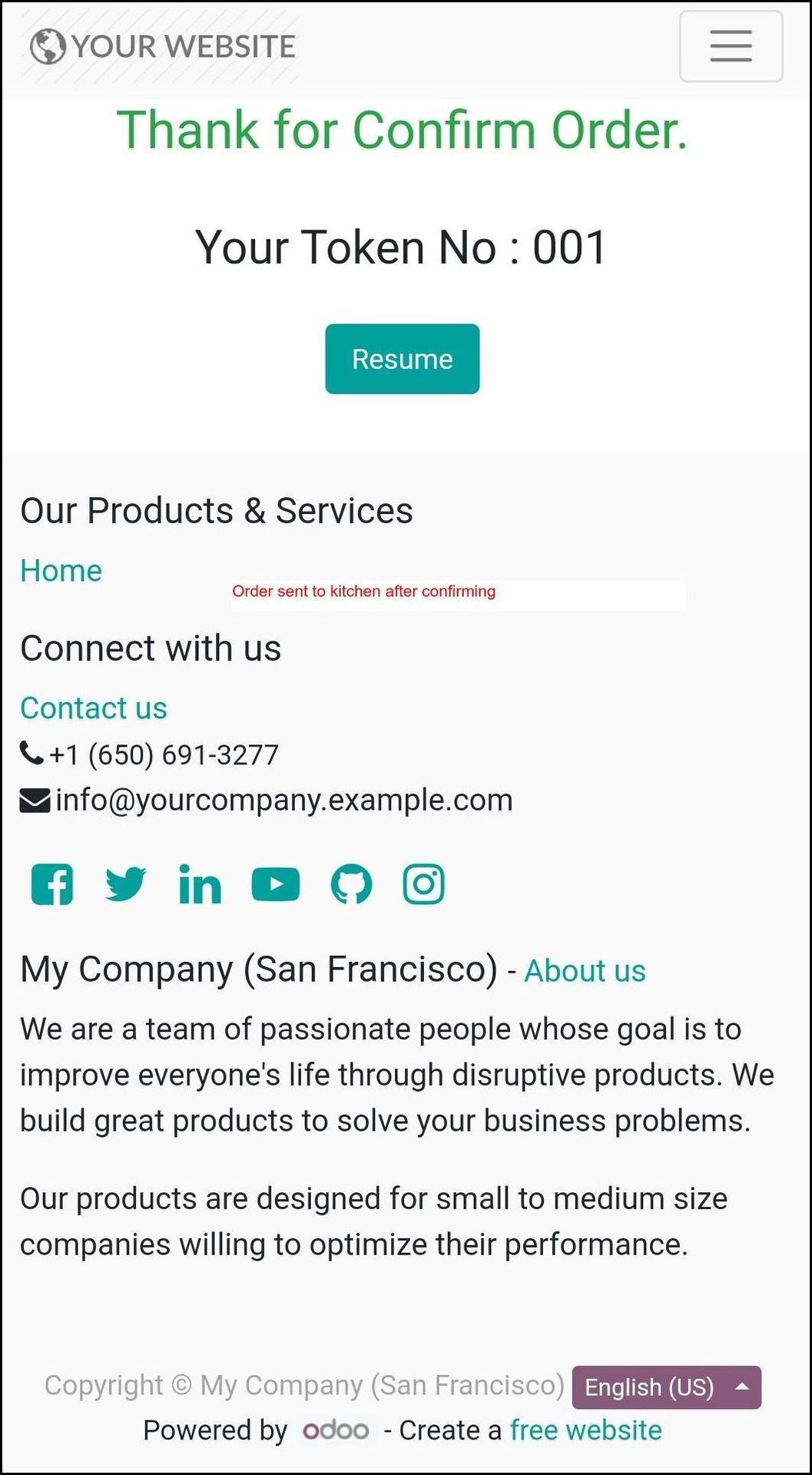
The customer can also add other products to the order by clicking on "Resume".
The order menu will open up again.
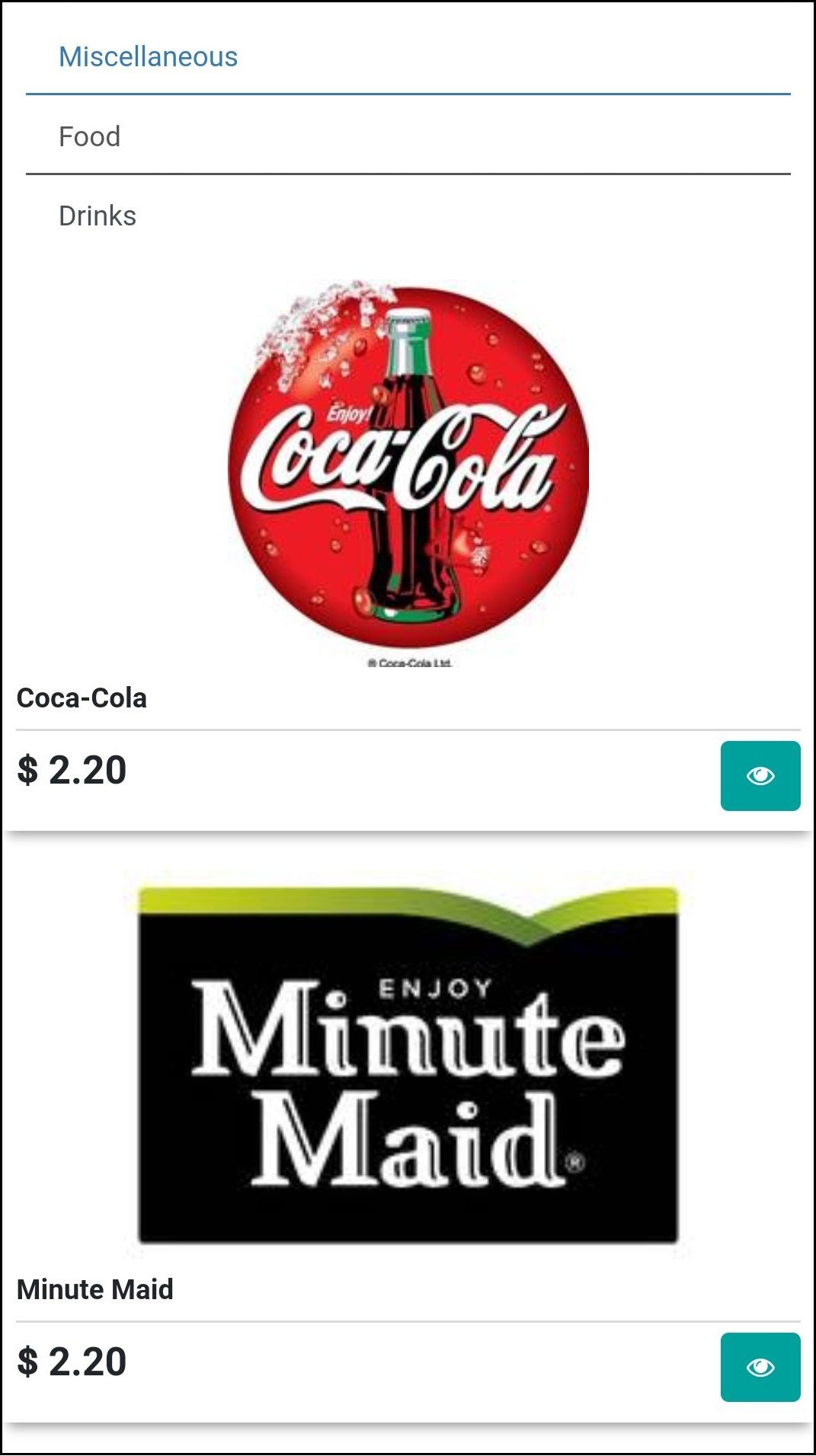
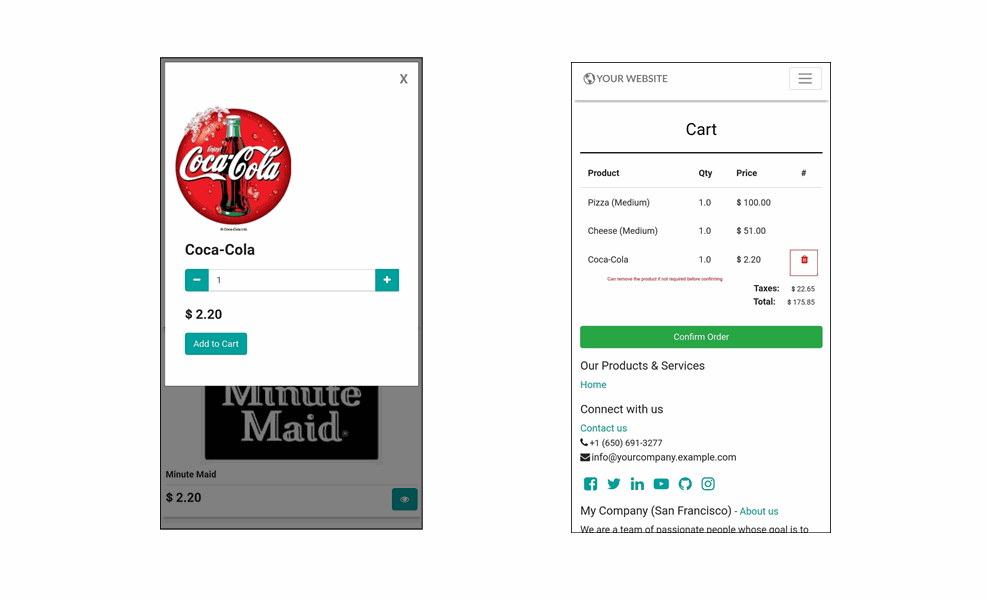
Let us say, for example, if the customer wants to add a drink to the order, click on "Add to cart" and the product will be added to the cart. After that, just confirm the order and it'll be sent to the kitchen.
We can also manage the orders at our end in the backend POS. We can add or modify the order at the backend of POS.
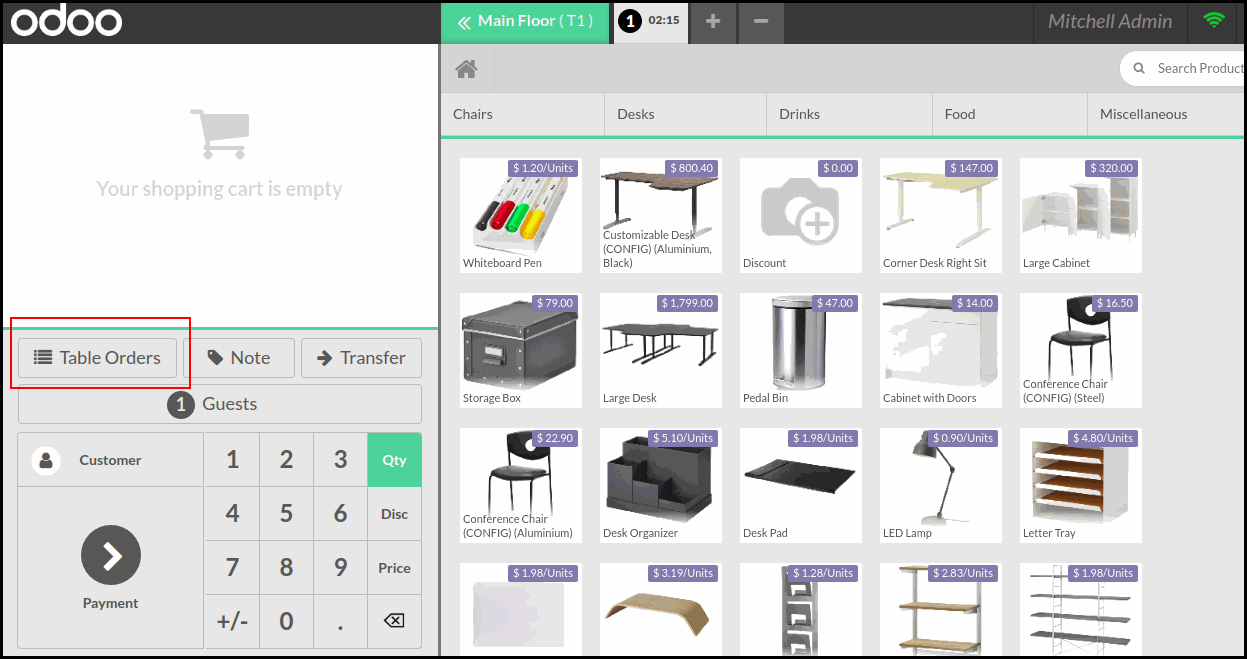
Select the table in the POS and click on the Table Orders tab.
We can see the Orders with their token number.
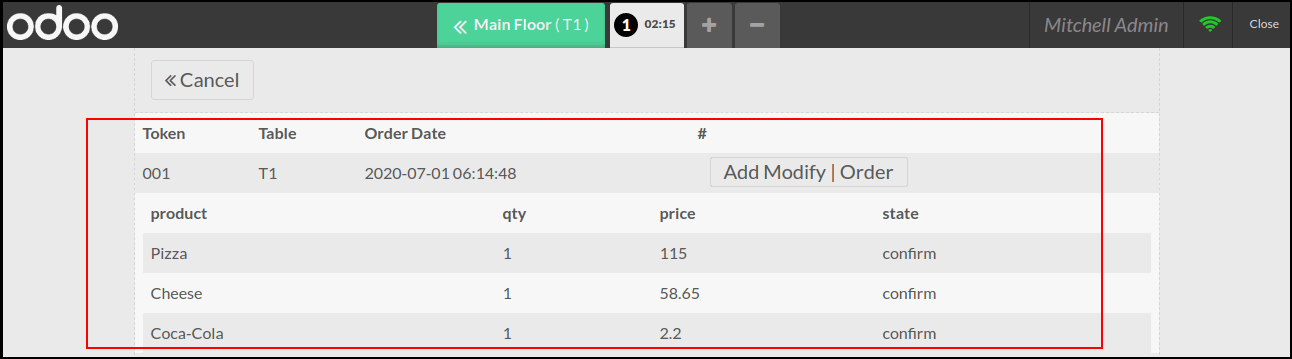
We can modify the orders by clicking on "Add Modify".
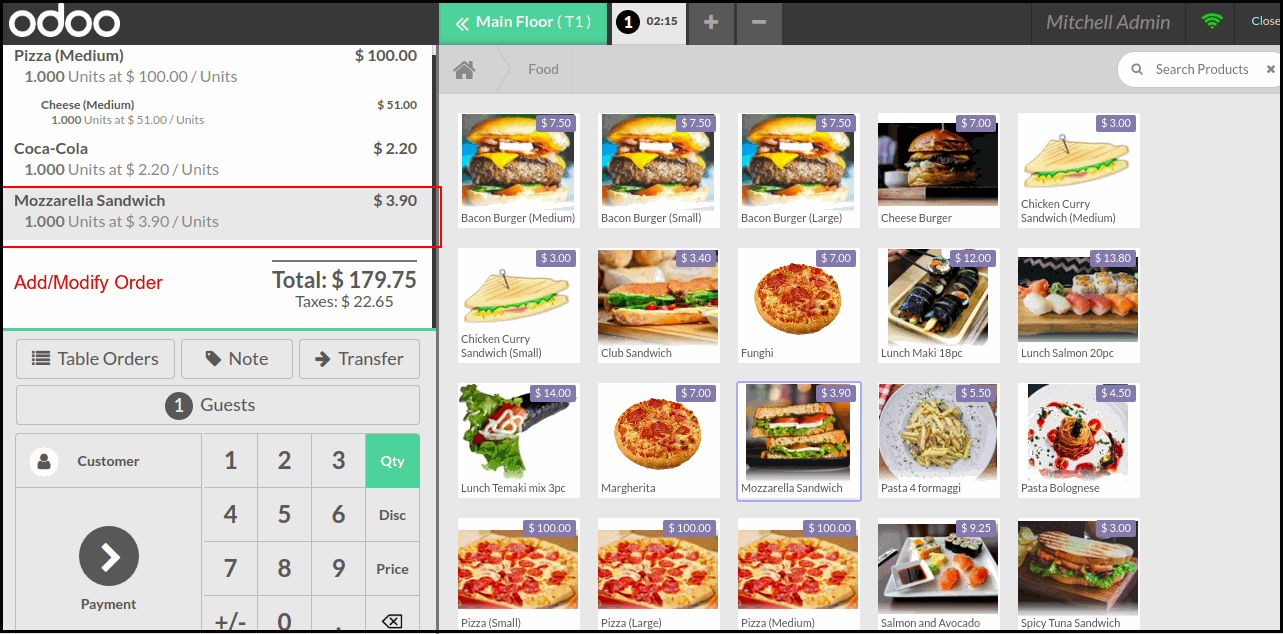
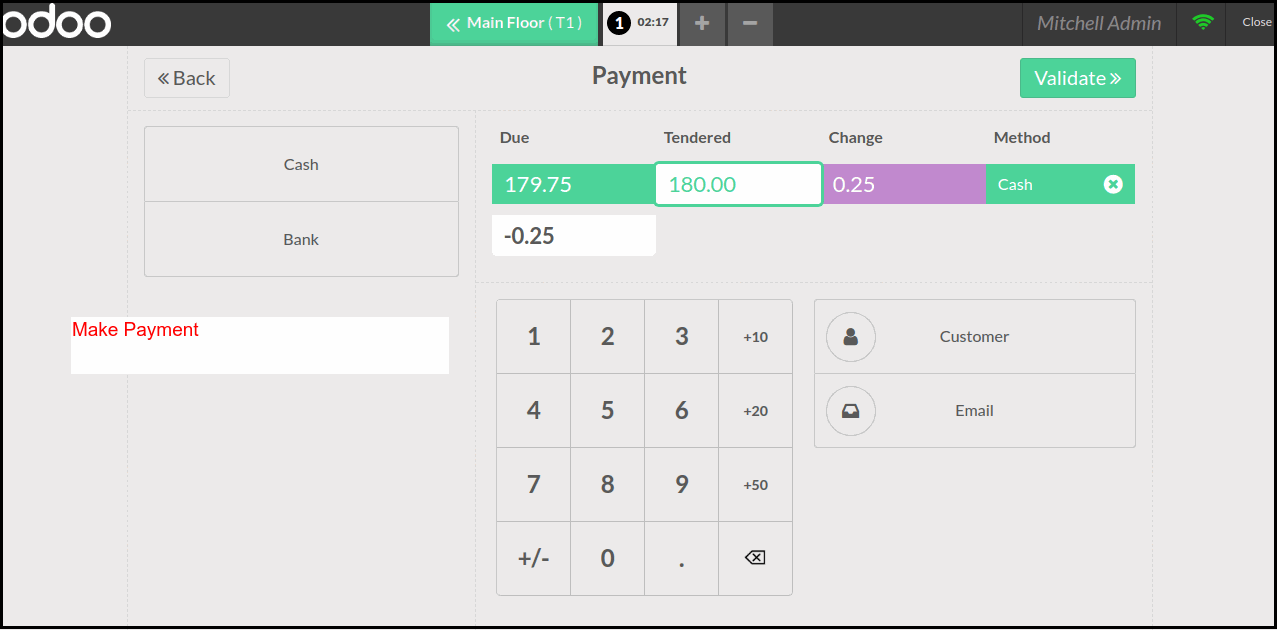
After the order is done and completed, we can make the payment by the default POS flow and the order will be completed.
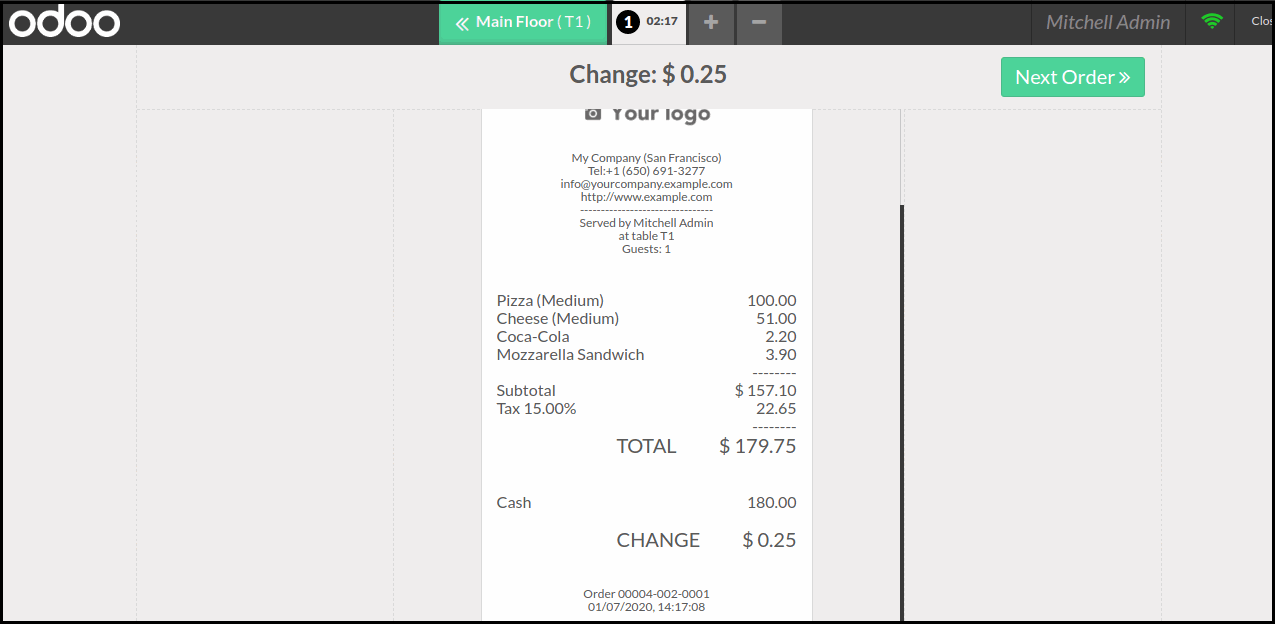
After the payment is done, the receipt for the order will be generated.
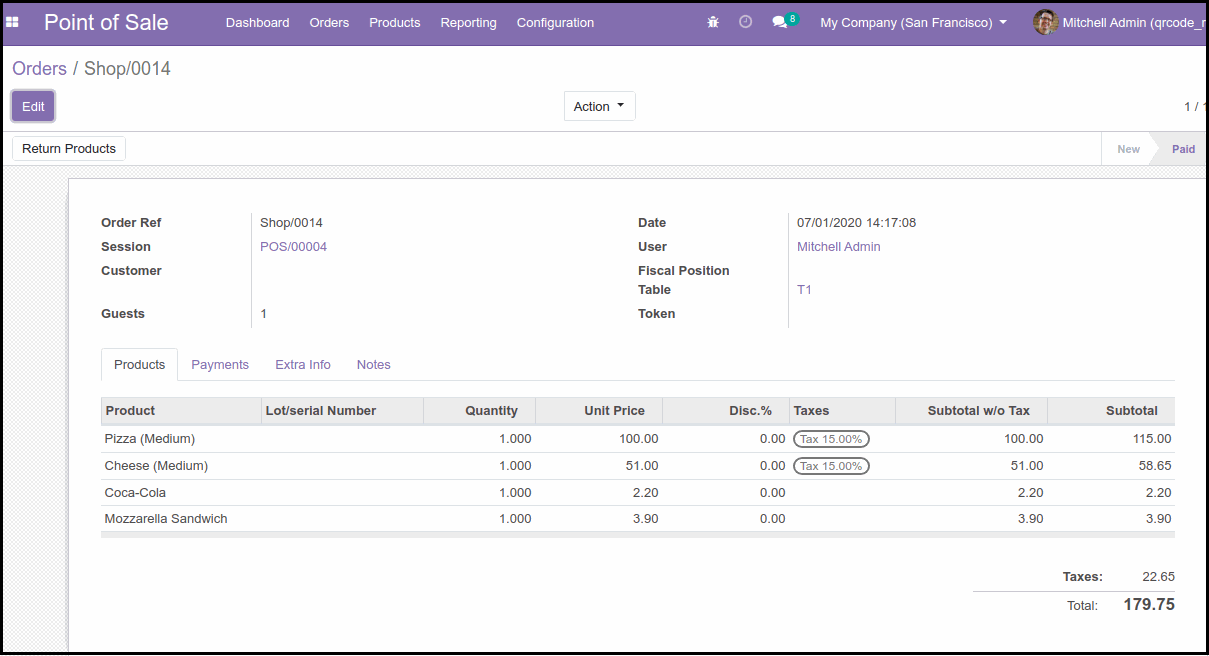
We can also see the orders in the backend.
So by using these modules, we can generate a very useful and customer-friendly, fast ordering processing and well-managed restaurant system.
We can use it to create as many floors and tables as we want and the QR code enabled access just to make it super easy for any customer to place their orders hassle-free.
We are currently working on the option to make the payment at the customer end and this feature will be available soon.
The whole document is done on v13 modules and the modules are available in v11 and v12 also.
Here are the Modules:
Feel free to contact us if you have any query related to the mentioned odoo modules in the comment section. You can contact our professional team of Odoo ERP Developer for Odoo Customization Services.
Ready to transform the way your restaurant operates? Our POS Table Order QR Code module can make it happen. Schedule a demo now and experience the future of efficient dining.
Manufacturing (MRP, production planning)
Hospitality & restaurants
Education & LMS
Retail & eCommerce
Healthcare
Logistics & 3PL
Distribution & trading
NGOs & non-profits
Export-import businesses
Strong Integration Expertise
Modern ERP systems require seamless connectivity. Kanak specializes in integrations with payment gateways, banking reconciliation systems, eCommerce marketplaces, logistics APIs, HRMS & biometric devices, and CRM and communication tools.
Standard-First ERP Philosophy
One major reason businesses prefer Kanak is its "standard-first" implementation approach. Instead of over-customizing Odoo unnecessarily, Kanak focuses on upgrade-friendly implementations, lower technical debt, better system performance, faster deployment cycles, and long-term scalability.
Global ERP Experience
Kanak serves clients across USA, Middle East, Europe, Australia, Singapore, Malaysia, and 50+ countries - enabling them to handle multi-company setups, multi-currency operations, localization & compliance, and cross-border business workflows.
Best for: Any business requiring deep customization, complex integrations, industry-specific Odoo expertise, or a long-term ERP partner with proven global experience.
Banibro IT Solutions
Official Odoo PartnerChennai BasedSME FocusedBanibro IT Solutions is known for its structured implementation methodology and business-focused ERP consulting approach. The company focuses on requirement analysis, workflow optimization, ROI-driven ERP planning, and seamless user adoption for SMEs and growing enterprises.
Key Strengths
- Business-centric consulting approach
- ERP process alignment
- Odoo customization for SMEs
- Third-party integrations
- Long-term support services
Best for: Small to mid-sized businesses in South India looking for practical and cost-effective Odoo implementations.
Serpent Consulting Services
Odoo Gold PartnerAhmedabad Based 10+ YearsSerpent Consulting Services has maintained a strong presence within the Odoo ecosystem for many years. The company specializes in Odoo consultation, migration services, custom development, integration support, and mid-sized enterprise deployments.
Key Strengths
- Stable and structured implementation methodology
- Strong upgrade compatibility focus
- Long-term ERP maintainability
- Reliable technical consulting
Best for: Mid-market companies needing structured Odoo consulting with long-term upgrade planning.
BrowseInfo
Odoo Best Partner India 20241200+ App Store Apps
Ahmedabad BasedBrowseInfo is recognized for handling complex Odoo customization projects and enterprise-grade ERP deployments. The company works with businesses requiring multi-location operations, complex approval workflows, enterprise automation, and high-volume ERP environments.
Key Strengths
- Large-scale implementation capabilities
- Enterprise workflow customization
- Odoo performance optimization
- Scalable architecture support
- Largest App Store module volume
Best for: Healthcare, retail, and businesses needing quick module deployment from the App Store.
Cybrosys Technologies
Official Odoo PartnerKerala BasedTechnical SpecialistsCybrosys Technologies is widely known for its strong technical capabilities in the Odoo ecosystem. The company has extensive experience in module development, Odoo migrations, backend customization, technical optimization, and performance enhancement.
Key Strengths
- Strong engineering and development capabilities
- Odoo app and module development
- Technical troubleshooting expertise
- Version migration experience
Best for: Businesses needing heavy backend customization, complex module development, or technically intensive implementations.
Side-by-Side Comparison

How to Choose the Right Odoo Implementation Partner
Choosing the right Odoo consulting company is one of the most important decisions for ERP success. Here are the key factors every business should evaluate before signing a contract:
Odoo Experience
Choose a partner with proven implementation experience and long-term Odoo expertise. Look for 10+ years minimum for complex projects.
Industry Understanding
Industry-specific experience reduces implementation time and improves process alignment. Ask for case studies in your exact sector.
Certified Odoo Experts
Certified functional consultants and developers ensure better implementation quality. Ask how many team members hold current Odoo certifications.
Structured Methodology
A reliable partner provides requirement gathering, gap analysis, milestone planning, UAT, training, and go-live support as standard.
Integration Capabilities
Modern ERP needs connections with banking systems, logistics providers, HRMS, payment gateways, and eCommerce. Ask for live demos of past integrations.
Post-Go-Live Support
ERP implementation is not a one-time project. Get SLA response times in writing. Ask about AMC pricing and how version upgrades are handled.
Upgrade-Friendly Development
Excessive customization blocks future Odoo version upgrades. Good partners follow a standard-first approach — customizing only where it creates genuine value.
Scalability
Your ERP should grow with your business. Choose a partner who can support future module expansions, upgrades, and process improvements over 5–10 years.
⚠ Red flag: Any partner who gives a fixed-price quote without a discovery or requirements phase is underscoping your project. This almost always leads to scope creep, delays, and budget overruns. A serious partner insists on a requirements phase before quoting.
Odoo Community vs Enterprise — What's the Difference?
One of the most common questions businesses ask when evaluating Odoo is: What is the difference between Odoo Community and Odoo Enterprise?

For businesses planning long-term ERP scalability, Odoo Enterprise is usually the preferred choice. The added cost is offset by official support, automatic upgrades, and significantly more powerful modules.
How Much Does Odoo Implementation Cost in India?
Odoo implementation cost in India depends on multiple factors including number of users, modules required, customization complexity, integrations, data migration, industry workflows, and training requirements.

Partner hourly rates in India typically range from ₹1,500 to ₹4,500 per hour depending on seniority and firm. Budget an additional 10–20% contingency for data cleanup and integration complexity. Note: Odoo Enterprise license costs (approximately ₹2,000–4,000 per user per month) are separate from implementation fees.
⚠ Important: Businesses should focus on implementation quality and long-term ROI — not just the lowest upfront pricing. A cheaper implementation that fails costs significantly more than a quality one done right the first time.
How Long Does Odoo Implementation Take?

Timeline depends on customization level, data migration complexity, user training, integration requirements, and internal approvals. An experienced Odoo partner significantly reduces delays and implementation risks through structured methodology and reusable configurations.
Why India Is a Global Leader in Odoo Consulting ?
India has become one of the world's strongest destinations for Odoo consulting and ERP implementation because of:
- Highly skilled Odoo developers and consultants — India produces more Odoo-certified professionals than almost any other country
- Competitive pricing with global service quality — Indian partners deliver enterprise-grade implementations at a fraction of Western market costs
- Global delivery experience — top Indian partners have successfully delivered ERP projects across USA, Europe, Middle East, and Asia
- Strong offshore support models — time zone coverage allows near-24/7 support for international clients
- Large technical talent pool — continuous pipeline of Odoo-trained engineers and functional consultants
- Enterprise implementation expertise — experience across manufacturing, retail, healthcare, logistics, and finance industries
Final Verdict — Which Odoo Partner Should You Choose?
The best Odoo implementation partner is not simply the company with the lowest pricing or biggest team. The right partner should understand your business processes, recommend scalable ERP strategies, minimize unnecessary customization, ensure smooth user adoption, provide long-term support, and deliver measurable ROI.
For businesses looking for a highly experienced, globally trusted, and scalable ERP consulting company, Kanak Infosystems LLP remains one of the strongest choices for Odoo implementation in India in 2026 — backed by 14+ years of experience, 500+ successful implementations, and one of India's largest Odoo App Store portfolios.
Frequently Asked Questions (FAQs)
Kanak Infosystems LLP. is considered one of the leading Odoo implementation partners in India due to its 14+ years of experience, 500+ implementations, 500+ apps on the Odoo App Store, global presence across 50+ countries, and a 95% client retention rate. Active since the TinyERP era, Kanak is among India's earliest Odoo partners.
Odoo implementation cost in India typically ranges from ₹3 lakh to ₹30 lakh+ depending on business size, modules, customization, and integrations. Small businesses (5–15 users) can expect ₹3–8 lakh. Mid-sized companies typically spend ₹10–25 lakh. Large enterprises may need ₹30 lakh or more. Odoo Enterprise license costs (approximately ₹1,000–2,000/user/month) are separate from implementation fees.
Basic implementations take 4–8 weeks. Mid-sized ERP deployments take 2–5 months. Enterprise-level implementations take 6–12 months. An experienced partner significantly reduces delays through structured methodology and reusable configurations.
Odoo Community is free and open-source with basic ERP functionality and community support. Odoo Enterprise is a paid subscription that includes advanced modules, official Odoo support, mobile app support, better UI/UX, Studio customization tools, and advanced accounting and reporting. For businesses planning long-term scalability, Odoo Enterprise is usually the preferred choice.
Evaluate: years of Odoo-specific experience, number of completed implementations, industry expertise relevant to your sector, certified developers, App Store contributions, client references in your industry, post-go-live support SLA, and customization philosophy. Good partners follow a standard-first approach to keep systems upgrade-friendly.
Yes. Odoo offers strong manufacturing capabilities including MRP, production planning, quality management, inventory tracking, barcode integration, and maintenance management. Kanak Infosystems has implemented Odoo for dozens of manufacturing companies across India and internationally.
Yes. Odoo is highly modular and scalable, making it suitable for startups, SMEs, and enterprises alike. Small businesses can start with just 1–2 apps and add more as they grow. With the right implementation partner, small businesses can go live in 4–6 weeks.
Businesses globally prefer Indian Odoo consulting companies because they offer highly skilled developers, competitive pricing with global service quality, extensive international ERP experience, strong offshore support models, and deep expertise across manufacturing, retail, healthcare, logistics, and finance industries.
Your email address will not be published.